

For almost everyone in Britain, a routine dental X-ray or an airport scan is not a meaningful health risk, and the reason is simple arithmetic. Doses are tiny next to the radiation you absorb every day from rocks, air, food and space. So, are X-rays safe in the UK? The usual ones, used when a clinician judges them necessary, are very safe indeed. Here are seven myths worth retiring, with the numbers that sit behind them.
First, a unit. The millisievert (mSv) measures effective dose, which weighs up how much radiation reached the body and how sensitive the tissues were. The UK Health Security Agency (UKHSA) publishes figures for the average dose from natural and medical sources, and the numbers below are approximate, rounded values of the kind it and other bodies give.
Myth 1: Any dose of radiation is dangerous
Radiation is part of the environment, not a modern invention. The average person in the UK receives roughly 2.7 mSv a year from all sources, according to UKHSA, with most of it natural and radon gas in homes the biggest single part. Risk rises with dose, and at the very low levels of a dental X-ray it is too small to measure directly. Regulators assume a cautious straight-line model and ask that every exposure be justified and kept as low as reasonably practicable.
Myth 2: Dental X-rays give you a big dose
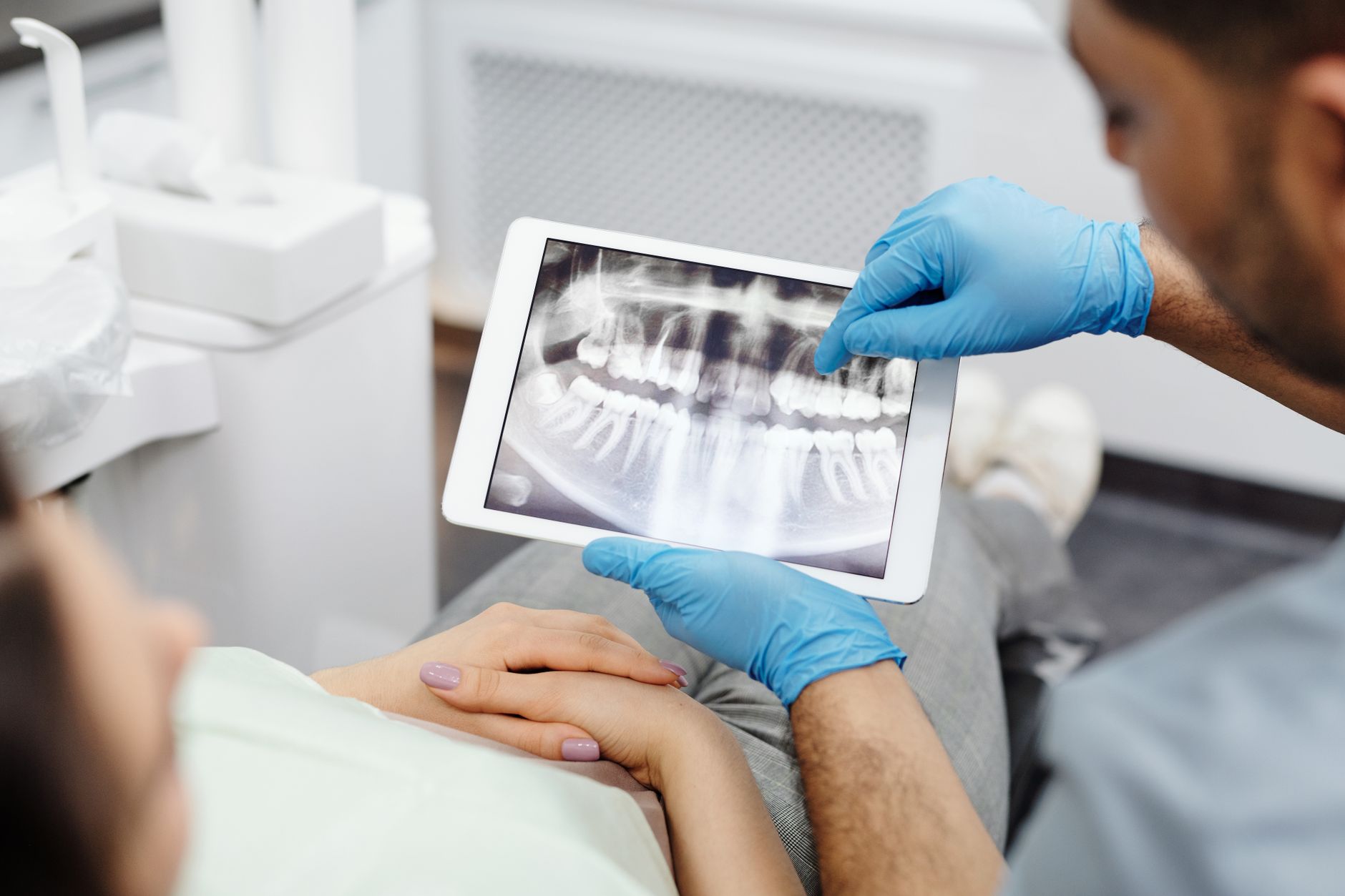
A routine bitewing dental X-ray delivers a dose of a few microsieverts, which is thousandths of a millisievert. That is comparable to a day or less of natural background radiation. Modern digital sensors and tight collimation have pushed doses down further from the film era. A dentist in the UK must be able to justify each image under the Ionising Radiation (Medical Exposure) Regulations, so you should not be X-rayed on autopilot.
Myth 3: Airport scanners are a radiation hazard
Airport body scanners in the UK use millimetre-wave technology, which is non-ionising and cannot damage DNA the way X-rays can. Hold-baggage machines do use X-rays, but your bag is inside a shielded tunnel and you are not. Where backscatter X-ray scanners were used elsewhere, the dose per scan was reported to be a fraction of a microsievert. The flight itself is the bigger source: cosmic rays at altitude add a few microsieverts per hour, so a long-haul return can exceed a dental X-ray.
Myth 4: Bananas are radioactive, so food is risky
Bananas are mildly radioactive, because they contain potassium, and a small fraction of all potassium is the radioactive isotope potassium-40. Eating one gives a dose of roughly a tenth of a microsievert. The “banana equivalent dose” is a jokey but genuinely useful way of scaling things, not a warning. Your own body contains potassium-40 too, and it contributes to your yearly dose whether you eat bananas or not.
Myth 5: Where you live in the UK makes no difference
It makes a real difference, and Cornwall is the famous example. Granite holds uranium and thorium, and it releases radon gas, so parts of Cornwall and Devon have among the highest natural background radiation in Britain. Average annual doses in Cornwall are commonly quoted at around 7 mSv, against roughly 2 mSv or a little under in much of London, though figures vary by area and by house. UKHSA publishes radon maps by postcode area, and a home test kit is the way to find out about your own property. Cornish residents have not shown the dramatic health penalty some people expect, which is part of why this field is so hard to study.
How do medical X-ray doses compare?
A medical X-ray dose is best judged against background radiation. The figures below are typical approximate values, and individual examinations vary with equipment and body size.
| Source | Approximate dose |
|---|---|
| Banana | 0.0001 mSv |
| Dental bitewing X-ray | 0.005 mSv or less |
| Chest X-ray | about 0.02 mSv |
| Mammogram | about 0.4 mSv |
| CT scan of the abdomen | around 10 mSv |
| UK average natural background, per year | about 2.3 mSv |
The CT line is the one that deserves respect. CT scans give the largest doses in everyday medicine, which is why they are requested when the diagnostic benefit is clear.
Myth 6: Early X-ray workers prove it was always harmless
The history cuts both ways. Wilhelm Röntgen announced X-rays in late 1895, and within months doctors were imaging bones. Early radiographers, working without shielding, suffered burns and cancers, and that experience led to the first dose limits in the 1920s and 1930s. Modern safety rules are written from those mistakes. The same lesson applies to synchrotron science: the intense X-ray beams once produced at Daresbury were handled inside heavy concrete shielding and interlocked hutches, because high intensity demands strict control.
Myth 7: Pregnancy means every X-ray is off limits
Not quite. Most diagnostic X-rays, such as of the hand or chest, do not expose the womb directly and give a negligible dose to a baby. Even so, you should always say if you are or might be pregnant, so the radiographer can decide whether to proceed, shield, or choose another test such as ultrasound. That conversation is routine and expected.
What should you actually do?
Ask a simple question when offered a scan: what will it tell you that changes the treatment? Keep a note of your own X-ray history if you wish, though doctors do not usually need it. If you live in a granite area, test your home for radon, since that exposure is larger and fixable with ventilation or a sump. For general guidance on radiation and health, see the NHS website, and use the UKHSA radon maps to check your postcode.
Leave a Reply